
Recommended Services


Supported Scripts

Enough with the marketing fluff. If you are an engineer, DevOps specialist, or data operations manager, your proxy problem is not about “anonymity levels.” It is a fundamental infrastructure problem involving IP geolocation, Autonomous System Number (ASN) reputation, HTTP header integrity, and request pattern analysis. Choose wrong, and your entire data pipeline or service automation fails. This is a technical dissection of what actually matters.
The Decisive Factor: ASN & IP Origin Reputation
Every IP address belongs to an Autonomous System, a block of IPs managed by a single entity. Anti-bot systems don’t just blacklist IPs; they blacklist entire ASNs known for hosting proxies or malicious traffic. This is the first and most critical filter.
Datacenter Proxies (The Liability): These originate from ASNs owned by cloud and hosting providers (e.g., AS14618 – Amazon, AS16276 – OVH). Their entire purpose is to host servers, not residential users. Their IP ranges are meticulously documented. Modern fingerprinting techniques don’t just check a list; they analyze the entire TCP stack, TLS handshake, and even the timing of packets from these ASNs. Your request is dead before the HTTP session is fully established. Using them for scraping, account management, or any traffic that needs to mimic human behavior is architecturally flawed. The latency is low, but the success rate is lower.
Residential Proxies (The Correct Abstraction): These IPs are from ASNs owned by consumer Internet Service Providers (e.g., AS7922 – Comcast, AS3320 – Deutsche Telekom). The traffic profile from these networks is heterogeneous and noisy, consisting of real human browsing patterns. This is the abstraction you need: your automated requests are buried within the legitimate traffic of an entire ISP’s subscriber base. You are not buying an IP; you are buying the reputation of an ASN. The trade-off is variable latency and higher cost per request, which is an engineering problem of connection pooling and timeout management, not a fundamental flaw.
A Lesson in Absurdity: Once, in a push to cut costs, our team decided to replace a large residential proxy cluster for a social media listening tool with a custom-built solution using cheap, rotating datacenter IPs from a “bulk provider.” The logic was sound on paper: more IPs, faster rotation, 80% cost reduction. The result was absurdly predictable to any network engineer: within 48 hours, every single IP in our entire /24 subnet was globally banned not just from the target platform, but from several ancillary services (CDNs, analytics providers) because their ASN was flagged. We spent a week firefighting false positives in our own monitoring systems that were now receiving traffic from “known proxy networks.” We reverted to residential IPs, ate the cost, and learned: you cannot fake ASN reputation.
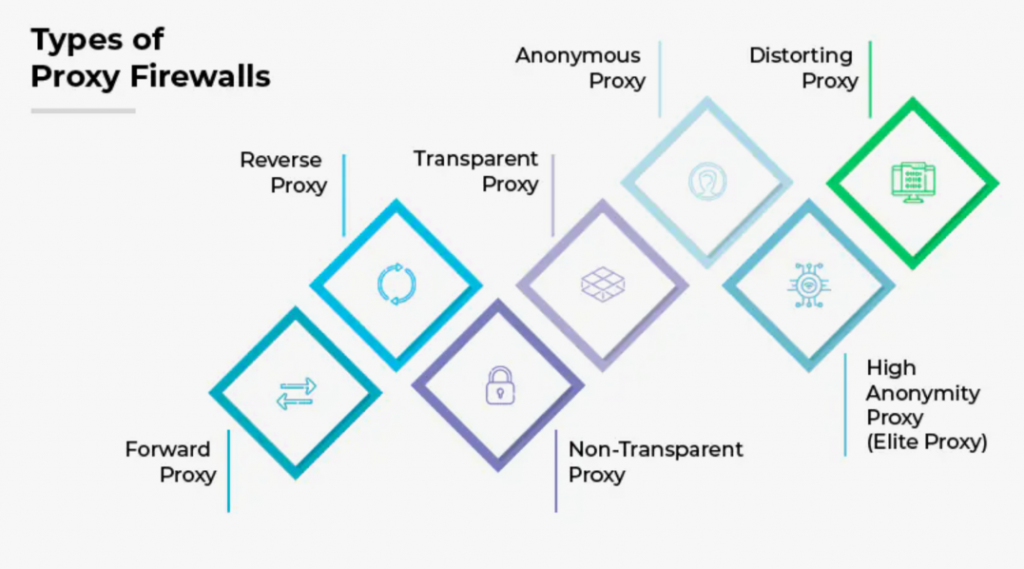
HTTP Header Manipulation: “Elite” is Not a Feature, It’s a Requirement
The “transparent,” “anonymous,” and “elite” taxonomy is a simplistic view of HTTP header integrity. A proper proxy must act as a full TCP endpoint and re-originate the HTTP request.
- Transparent/Intercepting Proxy: Forwards
X-Forwarded-For, addsViaheader. Reveals the proxy chain and often the client IP. Useless for evasion; only for caching and corporate policy enforcement. - Anonymous Proxy: Removes
X-Forwarded-Forbut may still addViaor other proxy-identifying headers. Easily detected via header analysis. - High-Anonymous (Elite) Proxy: Presents a clean, client-like HTTP stack. No proxy headers. The TCP connection and HTTP session appear to originate directly from the proxy’s IP. This is not a premium feature; it is the baseline requirement for any proxy used in automation. If your provider does not guarantee this, terminate the contract.
Mobile Proxies: A Specialized Tool, Not a Panacea
Mobile proxy IPs belong to ASNs of mobile carriers (e.g., AS21928 – T-Mobile USA). They have a distinct advantage: their IP pools are vast and rotate constantly due to Carrier-Grade NAT (CGNAT), making persistent blocking inefficient. However, their network paths are longer, introducing higher and more variable jitter. They are not “better” than residential proxies; they are different. Use them when:
- The target service is primarily mobile-app-based and validates the network type.
- You require extreme IP volatility.
- Your tasks can tolerate higher failure rates and retries.
The Engineering Checklist for Implementation
Do not buy a “proxy.” Specify an infrastructure component.
- 1. ASN Source: Is it residential (ISP) or datacenter (hosting)? Demand transparency.
- 2. Header Integrity: Does the proxy strip ALL identifying headers? Test it yourself with a curl command to a header inspection site.
- 3. Subnet Diversity: Are the IPs spread across multiple subnets and geolocations to avoid mass subnet bans?
- 4. Rotation Logic: Is rotation based on request, session, time, or ban? Can you control it via API?
- 5. Failure Mode: What is the provider’s response to a banned IP? Instant removal from the pool, or do you pay for dead endpoints?
The fix for our earlier disaster was not just switching back. It was building a weighted, failover system that used residential ASNs as the primary pool, with a separate, isolated gateway for tasks that could tolerate datacenter IPs, all monitored by a consensus system that tracked IP ban rates per target domain. It worked. The cost was higher, but the system’s reliability became a business asset, not a constant crisis. Build for resilience, not just for uptime. Choose the right foundation.