
Recommended Services


Supported Scripts

Let’s be blunt. If you’re using datacenter proxies for any serious competitive analysis, web scraping, or multi-account management, you are actively sabotaging your own operations. You are not being clever; you are broadcasting your intentions to every target server’s security system. This isn’t an opinion—it’s a technical reality based on network architecture and fraud detection paradigms. The resulting blocks, CAPTCHAs, and poisoned data aren’t bad luck; they are the predictable, deserved consequence of using the wrong tool. The amateur hour ends now.
The core failure is one of identity. A datacenter proxy IP originates from a known hosting provider block (e.g., AWS us-east-1, DigitalOcean NYC3). These blocks are cataloged in real-time IP reputation databases. Your request carries a digital signature screaming “SERVER FARM.” Modern anti-bot systems don’t just block these; they engage in counter-intelligence, serving falsified HTML, misdirected redirects, or dummy data to mislead your scrapers. You are not gathering intelligence; you are potentially consuming disinformation, making business decisions based on a fiction engineered by your competitor’s firewall.
A Lesson in Absurdity: I recall an early campaign where the team had a “brilliant” idea. To track a competitor’s real-time pricing, they built a sophisticated scraper. To “save costs,” they ran it through a pool of cheap, cloud-hosted proxies. For weeks, the data showed our competitor’s prices were inexplicably, consistently 30% lower than ours, threatening our entire model. Panic ensued. Only after a manual check did we discover the truth: the competitor’s system, detecting our datacenter IPs, was feeding our bot a completely separate, discounted test page invisible to real users. We were optimizing against a phantom. The solution was mortifyingly simple: we switched to a rotating residential proxy network. The script, now appearing as everyday residential traffic, immediately began pulling accurate, live data. The crisis was entirely self-inflicted.
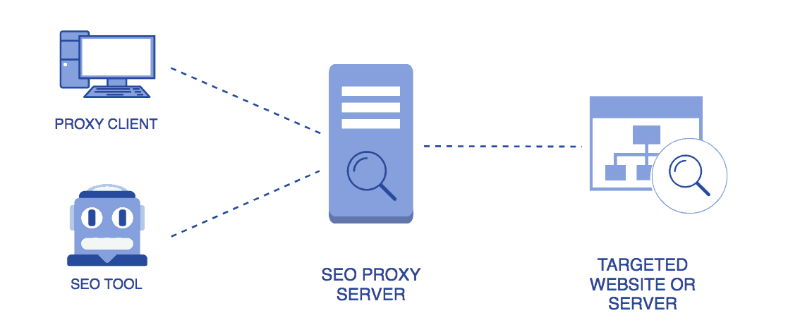
The Technical Superiority of Residential Architecture
The solution is not another “premium” datacenter proxy. It is a fundamental shift to residential proxy infrastructure. The technical distinction is categorical:
- Origin: IPs are assigned by consumer ISPs (Comcast, Deutsche Telekom, etc.) to actual homeowner devices.
- Reputation: These IPs inhabit neutral or positive reputation pools, as they are the backbone of legitimate human traffic.
- Detection Profile: They lack the tell-tale ASN (Autonomous System Number) patterns of hosting providers. To a web server, a request from a residential IP is statistically indistinguishable from a genuine user visit.
This architecture solves the critical failure points:
- Unblockable Scraping: Web crawlers distributed across a rotating pool of global residential IPs present as organic traffic spikes. Rate limiting becomes your only concern, not instant IP blacklisting.
- Geo-Targeting Fidelity: Need the actual search engine results page (SERP) for “best VPN” from an IP in Paris? A French residential proxy provides the exact local, personalized output, which datacenter IPs often fail to replicate accurately due to Google’s location heuristics.
- Account Integrity Management: Platform algorithms (Facebook, Google Ads) link accounts accessed from shared datacenter IPs. A unique, stable residential IP per account creates a clean, isolated browsing environment that mimics natural user behavior, preserving account health.
Implementation: Precision Over brute Force
Deploying this tool requires precision, not just power. The “spray and pray” method is for amateurs. Professional use involves:
- Session Control: Assigning sticky sessions (where a task retains the same residential IP for its duration) for actions like checkout flow testing or multi-step analytics.
- Geolocation Granularity: Selecting IPs not just by country, but by city or ISP, to match your target demographic with absurd accuracy.
- Concurrent Thread Management: Calculating optimal request rates per IP to stay within the noise floor of normal human behavior for that network, avoiding detection through anomalous volume even from a “clean” IP.
Conclusion: The Professional Mandate
This isn’t a choice. It’s an operational necessity.
Using datacenter proxies for data acquisition is professional malpractice. You will be blocked, fed false information, and waste resources. Period.
Residential proxies are the industry-standard solution because they solve the fundamental technical flaw: the identity problem. They make your traffic indistinguishable from legitimate user traffic. This isn’t an upgrade; it’s the correct foundational tool for accurate scraping, true geo-testing, and secure account management.
Stop sabotaging your own data integrity. The only logical step is to integrate a residential proxy network into your stack. The accuracy of your data, and the effectiveness of your decisions, depend on it.