
Recommended Services


Supported Scripts

Let’s be honest: if you’re not monitoring your competition, you’re already behind. You need to track their prices, analyze their ads, and reverse-engineer their strategy. However, there’s a massive, frustrating problem. The moment you try to do this systematically, you get blocked. Websites deploy sophisticated defenses that spot and ban any activity that looks like automated data collection. Consequently, your crucial market research hits a wall before it even begins.
The core issue is your digital fingerprint. Your IP address is a unique identifier that makes you incredibly easy to track and stop. This is where proxy servers cease to be a tool for tech specialists and become essential business infrastructure. Fundamentally, a proxy acts as a middleman. Instead of connecting directly to a website, your traffic is routed through an intermediary server. As a result, the target site sees the proxy’s IP address and location, not yours. This simple shift is the foundation of invisible, scalable competitive intelligence.
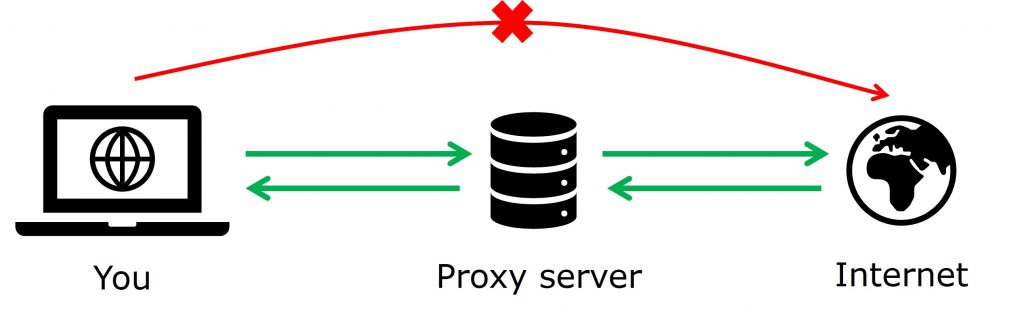
The Architecture of Anonymity: How Proxies Actually Work
To understand why proxies are effective, you must first grasp how websites detect unwanted bots. They analyze traffic patterns, request frequency, and IP reputation. A sudden surge of requests from a single IP is an obvious red flag. Therefore, the goal is to distribute your requests across a pool of IP addresses that appear to be ordinary users.
This is precisely what a professional proxy network provides. It isn’t a single server; it’s a vast, rotating pool of IP addresses from different sources. When you send a request, it comes from one of these addresses. Your next request can come from a completely different one, making your activity blend seamlessly into normal website traffic. This method effectively neutralizes the most common detection mechanisms.
From Personal Failure to Professional Solution: A Lesson Learned
Several years ago, our team attempted to automate price tracking for a key competitor. We built a simple script that checked their product pages every hour. Initially, it worked perfectly. However, within a day, our script started failing, and worse, our company’s main IP address was completely banned from their site. The absurd outcome was that our entire marketing and development team was locked out for “suspicious activity.” We had successfully sabotaged our own research capabilities. The solution, however, was straightforward. We migrated the entire process to a rotating residential proxy network. Overnight, the bans stopped, and we gained a reliable, uninterrupted stream of data. This experience underscored a critical lesson: brute-force data collection is doomed to fail, while distributed, intelligent sourcing succeeds.
Choosing Your Tools: A Technical Breakdown of Proxy Types
Not all proxies are created equal. Selecting the wrong type will waste resources and lead to immediate blocks. Your choice depends entirely on the technical requirements of your task.
Residential Proxies are the industry standard for serious data collection. These proxies use IP addresses assigned by real Internet Service Providers to actual homes. Because the traffic appears to originate from legitimate residential networks, it is extremely difficult for websites to distinguish it from a genuine customer. Consequently, residential proxies are ideal for long-term monitoring, price scraping, and ad verification where high success rates are critical.
Mobile Proxies offer an even higher level of authenticity. They route traffic through IP addresses provided by mobile carrier networks (like Verizon or T-Mobile). Websites are highly reluctant to block these IPs, as doing so could affect thousands of potential mobile customers. Thus, mobile proxies are the ultimate tool for auditing mobile-specific experiences, checking in-app advertisements, and navigating social media platforms with strict anti-bot policies.
Datacenter Proxies, while fast and inexpensive, come from cloud server providers. Their Achilles’ heel is that their IP ranges are publicly known and easily flagged. They are suitable for high-speed, short-duration tasks where IP blocks are acceptable, but they are a poor choice for sustained, stealthy competitive analysis. In other words, they are a tactical tool, not a strategic one.
Building Your Intelligence Pipeline: Integration and Best Practices
Implementing a proxy solution is a technical process, but it doesn’t require deep expertise. The key is following a structured approach to avoid common pitfalls.
First, you must select a reputable proxy provider. Avoid free services at all costs, as they are slow, insecure, and their IPs are almost always blacklisted. A professional provider will offer clean IP pools, reliable uptime, and clear integration guides.
Next, integrate the proxies with your data-gathering tools. Most modern scraping frameworks (like Scrapy or Playwright) and even no-code platforms (like Octoparse) have built-in settings for proxy configuration. You simply input the proxy server details—host, port, authentication—and the tool handles the rest. Furthermore, you must implement basic behavioral controls. This includes:
- Adding random delays between requests to mimic human browsing speed.
- Rotating User-Agent strings to represent different browsers and devices.
- Managing sessions and cookies appropriately to maintain consistency when needed.
By combining a quality proxy network with these obfuscation techniques, you create a robust system that can collect vast amounts of public data without triggering alarms.

Conclusion: From Vulnerability to Strategic Advantage
In the end, the shift to using proxies is a transition from vulnerability to control. Without them, your market research is fragile, obvious, and easily thwarted. You operate with a severe informational disadvantage, making reactive guesses instead of proactive decisions.
However, by deploying a structured proxy-based system, you turn publicly available information into a strategic asset. You gain the ability to monitor, analyze, and benchmark your competitors with reliability and precision. The technical barrier is low, but the competitive edge it provides is immense. Therefore, the mandate is clear: stop being a target that gets blocked. Architect your data-gathering infrastructure for stealth and scale. The intelligence you secure will become the foundation for your next major business decision.