
Recommended Services


Supported Scripts

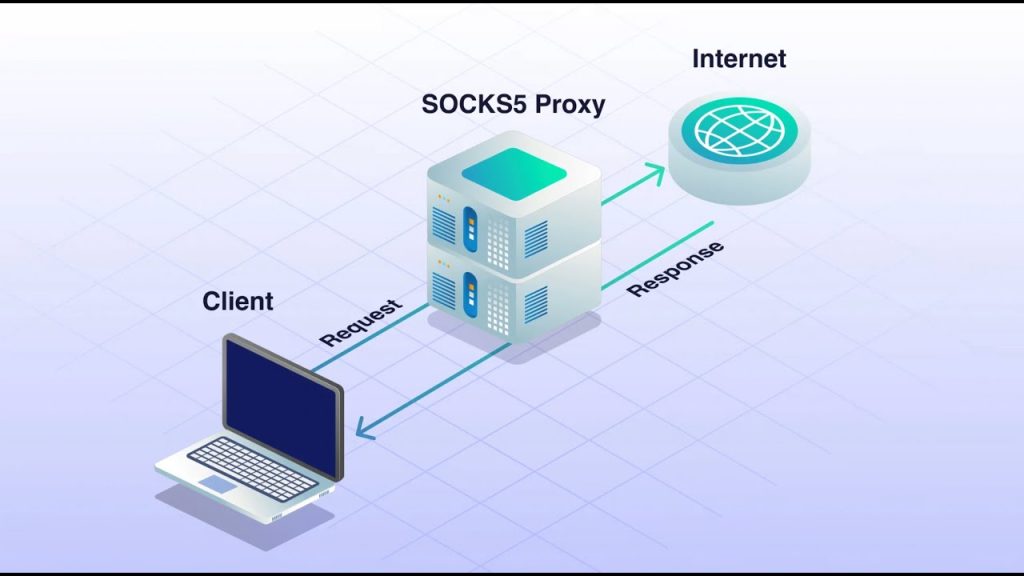
Let me be blunt: if you’re using an HTTP proxy for anything beyond basic web traffic, you’re doing it wrong. SOCKS5 isn’t an “alternative” proxy protocol—it’s what happens when engineers strip away everything unnecessary and build a pure tunneling mechanism. While HTTP proxies waste cycles parsing headers and pretending to understand protocols, SOCKS5 operates with surgical indifference. It doesn’t care if you’re sending HTTP, FTP, SMTP, or BitTorrent traffic. It sees bytes. It moves bytes. That’s it. This protocol-agnostic design makes it the de facto standard for applications that need to punch through restrictive networks without the overhead of a full VPN.
The comparison to VPNs is particularly irritating. A VPN creates a virtual network interface, forcing all your traffic through an encrypted tunnel with significant overhead. SOCKS5 is application-specific and operates at a higher layer. It’s not a replacement for a VPN; it’s a precision tool for specific tasks. Need to route only your torrent client through an external server? SOCKS5. Need to give a legacy application network access without opening firewall rules? SOCKS5. The protocol’s genius lies in its simplicity—it’s a dumb pipe, and that’s exactly what makes it brilliant.
A Story of Well-Intentioned Stupidity: Several years ago, a client insisted on “securing” all developer database access by forcing everyone through an HTTP proxy with deep packet inspection. The theory sounded good on paper. In practice, their proprietary database client used a binary protocol the proxy couldn’t comprehend. Connections dropped randomly. The “security” team blamed the developers. After two weeks of chaos, I configured the database client to use a SOCKS5 tunnel through a secured jump box. The HTTP proxy saw only an encrypted SSH connection, the security team got their audit trail, and developers could actually work. The solution was so simple it felt illegal.
The Protocol Handshake: No Nonsense Allowed
SOCKS5 operates with military precision. The initial handshake is a three-byte salvo from the client: 0x05 0x01 0x00. Translation: “I speak SOCKS5. Here’s one authentication method: NONE.” The server responds with two bytes: 0x05 0x00—”Acknowledged. No authentication needed.” There’s no negotiation, no fallback, no pleasantries. If the server requires authentication, it says so immediately, and the client either provides credentials or gets disconnected. This isn’t rudeness; it’s efficiency.
The connection request frame reveals the protocol’s strategic intelligence:
VER: 0x05 (obviously)CMD: 0x01 (CONNECT), 0x02 (BIND), or 0x03 (UDP ASSOCIATE)RSV: 0x00 (reserved, always zero)ATYP: The critical field. 0x01 for IPv4, 0x03 for DOMAIN NAME, 0x04 for IPv6DST.ADDR: The destination address (format depends on ATYP)DST.PORT: The destination port
The ATYP=0x03 (DOMAIN NAME) option is SOCKS5’s silent killer feature. When you use this, the client sends the target hostname as a string, and the proxy server handles DNS resolution. This means local DNS censorship—whether from your ISP, employer, or government—is completely bypassed. Your client never performs a DNS lookup that could be blocked or logged. The proxy, presumably in a less restrictive environment, resolves the name and establishes the connection. This single feature makes SOCKS5 invaluable for circumvention.
The Over-Engineering Trap: I once consulted for a company that built a “next-gen” SOCKS5 proxy with AI-powered traffic analysis. They spent months adding features: protocol detection, threat scoring, adaptive compression. The result was a unstable beast that consumed 10x the resources and introduced unpredictable latency. During a demo, it crashed because the AI misidentified SSH traffic as a “suspicious encrypted stream.” We replaced it with dante-server, a standard SOCKS5 implementation, on a smaller instance. Performance improved 300%, and it ran for years without issue. They’d forgotten the core principle: a proxy’s job is to proxy, not to play security analyst.
Where SOCKS5 Actually Matters in the Real World
Forget the theoretical use cases. Here’s where SOCKS5 proves its worth in practice:
- BitTorrent Clients: Every serious client supports SOCKS5 proxy configuration. It masks your IP from the swarm without the full-system overhead of a VPN. For pure seeding/downloading, it’s often faster.
- Firewall Evasion: Corporate networks frequently block outgoing connections on non-standard ports. SOCKS5 can tunnel that traffic over an allowed port (like 443), making SSH, gaming, or custom protocol traffic appear as normal web traffic.
- The Tor Network: Tor presents itself to applications as a SOCKS5 proxy (localhost:9050). This design choice isn’t accidental—it leverages SOCKS5’s protocol neutrality to route any supported application through the anonymity network.
- Developer Tooling: Need to connect a database GUI, API client, or monitoring tool to a remote resource through a jump host? SSH tunneling with SOCKS5 (
-Dflag) is the cleanest solution. It’s more elegant and less fragile than port forwarding.
The common thread here is specificity. You’re not tunneling all your traffic; you’re giving a particular application a controlled exit path. This reduces attack surface, improves performance, and simplifies network architecture.
Conclusion: Embrace the Dumb Pipe
In an era of bloated software and overcomplicated solutions, SOCKS5 stands as a testament to the Unix philosophy: do one thing, and do it well. It doesn’t try to be intelligent, it doesn’t attempt to inspect your traffic, and it certainly doesn’t slow down your connection with unnecessary features. Its value is precisely in its limitations.
The technical takeaway is clear: when you need a lightweight, protocol-agnostic tunnel for specific applications, SOCKS5 is the correct choice. It outperforms HTTP proxies for non-web traffic and outmaneuvers VPNs for targeted egress. Its built-in support for DNS resolution at the proxy side makes it a powerful tool against censorship. And its straightforward, RFC-defined operation ensures reliability that “smarter” proxies often sacrifice.
Stop overthinking your proxying needs. Configure your torrent client to use a SOCKS5 proxy. Set up an SSH SOCKS5 tunnel for your development work. Use Tor’s built-in SOCKS5 interface. Let the protocol do what it was designed to do—move bytes from point A to point C through point B, without commentary, without interference, and without fail. In a world full of complex systems that break in mysterious ways, there’s profound value in something that simply works.