
Recommended Services


Supported Scripts

We’re in the middle of a collective delusion. The industry has decided that raw throughput and shaved milliseconds are the only metrics that matter. In this fever dream, HTTP/2 and its embryonic successor, HTTP/3, are anointed as holy grails. This isn’t innovation; it’s a dangerously narrow-minded optimization that swaps understandable, manageable problems for a tangled web of opaque vulnerabilities and operational nightmares. Let’s strip away the hype and look at the technical debt we’re so eagerly incurring.
The False Panacea of HTTP/2
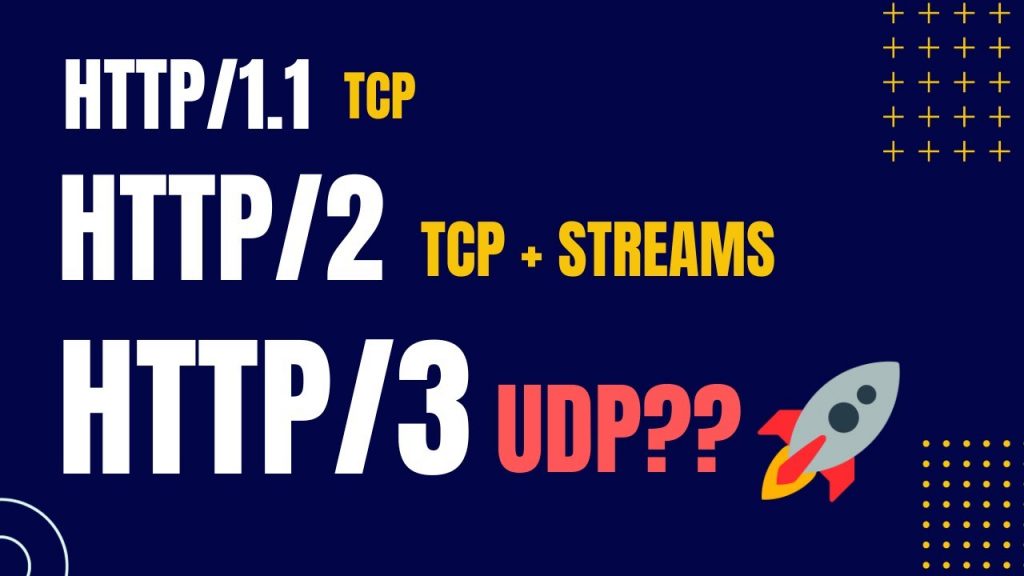
HTTP/1.1 was inefficient. Its head-of-line blocking was a clear target. HTTP/2’s answer—multiplexing streams over a single TCP connection—solved that application-layer problem with elegant binary framing. The performance charts looked phenomenal. The problem is, the industry saw the charts and stopped thinking.
We celebrated the death of HOL at Layer 7 but blissfully ignored that we’d built a mansion on a rickety foundation. The new, complex state machines for stream and priority management in HTTP/2 became a breeding ground for implementation flaws. The protocol’s very efficiency is its vulnerability.
You are not enabling a feature; you are deploying a new attack surface. The list of CVEs for popular HTTP/2 implementations is a testament to this. We’re talking about request smuggling variants that bypass front-end protections, stream-reset attacks that induce resource exhaustion, and dependency cycle attacks that cripple server logic. This isn’t theoretical. This is what you now have to defend against because your ops team was told to “enable HTTP/2 for SEO.”
- A Personal Anecdote of Absurdity: I once advised a company that, in a fervent push for “modernization,” force-enabled HTTP/2 across their entire legacy application fleet. The performance uplift was marginal. The result, however, was spectacular. Their outdated, unpatched load balancer had a flawed HTTP/2 state machine. A simple, scriptable attack could send a sequence of PRIORITY frames, creating a circular dependency the balancer couldn’t resolve, causing it to freeze and drop all connections for that worker process. They achieved “modern” by making their infrastructure fragile to a single malformed packet. It took a costly hardware refresh and a week of firewall rule tuning to stop the bleeding. The fix was good; the premise was reckless.
QUIC and HTTP/3: The Arrogance of Over-Engineering
If HTTP/2 was building on shaky ground, QUIC is the decision to build on quicksand and call it progress. The core premise—replacing TCP with a user-space, UDP-based transport—is an engineer’s solution in search of a problem that doesn’t justify the chaos it introduces.
The protocol’s mandatory, deep encryption of all control data is a staggering act of operational hubris. It creates a black box. Network diagnostics, latency analysis, and security monitoring—the foundational tools of infrastructure management—are rendered useless. You are told to trust the abstraction completely. In engineering, that’s not sophistication; it’s negligence.
Furthermore, abandoning TCP’s stateful handshake for UDP’s connectionless model is an open invitation for new vector DDoS and amplification attacks. Yes, QUIC has mitigations, but they are new, unproven at scale, and add yet more complexity to an already bloated stack. You’re trading a known, weathered set of TCP-based attacks for a frontier of unknown QUIC-based exploits.
The Responsible Path Forward
The conclusion is not to avoid these protocols. It is to adopt them with the severity they deserve.
- HTTP/2 is Mature, But Dangerous: Its benefits are real for latency-sensitive applications. Implementation quality has improved. Deployment is now acceptable, but only as part of a hardened stack. This means:
- Rigorous, automated patching of all HTTP/2-capable components (web servers, load balancers, CDNs).
- WAF rules specifically tuned for HTTP/2 attack patterns.
- Performance testing under adversarial conditions, not just clean labs.
- HTTP/3 is a Lab Experiment: Treat it as such. Outside of hyper-scale edge networks (Cloudflare, Google) where the teams building it can also debug it, there is no compelling reason for mainstream adoption. Wait for:
- Standardization to truly solidify.
- Enterprise-grade monitoring and security tools to catch up.
- At least two major “waves” of critical vulnerabilities to be found and patched in common libraries.
Chasing performance without a proportional investment in observability and security is not optimization; it’s sabotage. Speed without stability is worthless. We need to stop applauding the leap and start demanding a thorough inspection of the safety net. The next time someone insists on pushing the bleeding edge, ask them who will be holding the bandages.
Conclusion: Performance is a Feature, Not a Foundation
The relentless drive for speed at the expense of all else is a pathology in modern web engineering. HTTP/2 and HTTP/3 are not simply upgrades; they are profound architectural shifts that exchange the devil we knew for demons we are still discovering.
HTTP/2 delivered legitimate performance gains by solving application-layer head-of-line blocking, but in doing so, it introduced a sprawling, complex attack surface rooted in its stateful multiplexing. Its security is now a direct function of implementation quality and patch velocity—a continuous operational tax.
QUIC and HTTP/3, in their radical ambition to dismantle TCP, have created a new paradigm of opaque, encrypted transport. This solves a theoretical transport-layer HOL problem for a minority of edge-case users while creating very real, practical problems in observability, debuggability, and DDoS resilience for everyone tasked with keeping systems running.
The responsible path forward is not Luddism, but ruthless pragmatism:
- Deploy HTTP/2 only with the understanding that you are accepting a permanent, elevated security posture and committing to flawless patch management.
- Treat HTTP/3 as a high-risk, specialized tool for specific, measurable performance crises—not a default checkbox for “modernization.”
The lesson is timeless: complexity is the primary enemy of security and stability. Adopting these protocols without the expertise, tools, and operational rigor to manage their inherent complexity doesn’t make you cutting-edge. It makes you a liability. Build on a stable foundation first; only then chase the milliseconds.